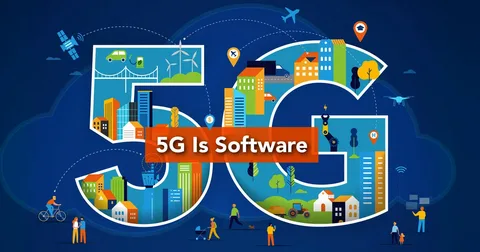
Fifth-generation wireless technology represents far more than incremental improvement over previous mobile networks, enabling transformative applications impossible with earlier infrastructure. Enhanced speeds reaching multiple gigabits per second, ultra-low latency measured in milliseconds, and massive device connectivity capacity create foundations for autonomous vehicles, remote surgery, smart cities, and immersive augmented reality experiences. Global 5G deployment accelerates despite geopolitical tensions around equipment suppliers and infrastructure security concerns. Understanding 5G’s capabilities, limitations, and societal implications helps separate legitimate possibilities from exaggerated hype while preparing for connectivity transforming work, entertainment, healthcare, and urban life.
Technical Capabilities and Performance Improvements
Peak download speeds theoretically reaching ten gigabits per second dwarf 4G capabilities, though real-world performance varies based on spectrum bands, network congestion, and device capabilities. Low-band 5G provides wide coverage with modest speed improvements, mid-band balances coverage and performance, while high-band millimeter wave delivers blazing speeds over limited ranges requiring dense antenna deployment. Latency reduction from typical 4G delays of fifty milliseconds to 5G targets under ten milliseconds enables real-time applications from cloud gaming to industrial automation requiring instantaneous responsiveness. Network slicing creates virtual networks optimized for specific use cases, dedicating resources to critical applications like emergency services while managing consumer traffic separately. Massive machine-type communications support connects hundreds of thousands of devices per square kilometer, essential for dense IoT deployments in urban environments. Beamforming technology directs signals toward specific devices rather than broadcasting in all directions, improving efficiency and reducing interference. However, 5G deployment requires significant infrastructure investment in new cell towers, fiber backhaul, and spectrum licenses, with full capabilities emerging gradually over years rather than immediate ubiquitous availability.
Transformative Applications Across Industries
Autonomous vehicles rely on 5G connectivity sharing real-time information about road conditions, traffic patterns, and potential hazards with other vehicles and infrastructure, enabling coordination impossible through onboard sensors alone. Telemedicine expands through high-quality video consultations, remote patient monitoring with continuous data transmission, and eventually robotic surgery performed by specialists located continents away from patients. Manufacturing embraces Industry 4.0 concepts with sensors monitoring every aspect of production, robots coordinating activities, and predictive maintenance preventing costly equipment failures. Augmented and virtual reality applications become practical for education, training, entertainment, and remote collaboration when 5G bandwidth and low latency eliminate motion sickness and lag plaguing earlier implementations. Smart city infrastructure from traffic management to public safety to energy distribution coordinates through real-time data exchange optimizing urban systems. Agriculture employs precision farming techniques with sensors monitoring soil conditions, drones surveying crops, and automated equipment responding to localized needs rather than treating entire fields uniformly. Entertainment evolves toward cloud gaming streaming console-quality experiences to any device and immersive sports viewing with multiple camera angles and statistics overlays personalized to viewer preferences.
Security Concerns and Infrastructure Challenges
Expanded attack surfaces from billions of connected devices create new cybersecurity vulnerabilities requiring robust protection beyond current standards. Network architecture distributing intelligence to edge nodes reduces central control while improving performance, though also complicates security monitoring and threat detection. Supply chain concerns particularly regarding Chinese equipment manufacturers like Huawei prompted some countries to ban specific vendors from 5G infrastructure over espionage fears, fragmenting the global market and increasing costs. Spectrum allocation requires government coordination balancing commercial deployment, military needs, and existing uses like satellite communications and weather forecasting. Energy consumption from dense antenna networks and data processing demands raises environmental questions despite efficiency improvements over previous generations. Health concerns about radiofrequency radiation persist despite scientific consensus finding no evidence of harm at regulatory limits, requiring continued public communication and research. Digital divide risks widening if 5G deployment concentrates in profitable urban areas while rural and underserved communities lack access to advanced connectivity. International standards development involves complex negotiations balancing national interests, commercial considerations, and technical requirements, with outcomes shaping global technology trajectory for decades ahead.