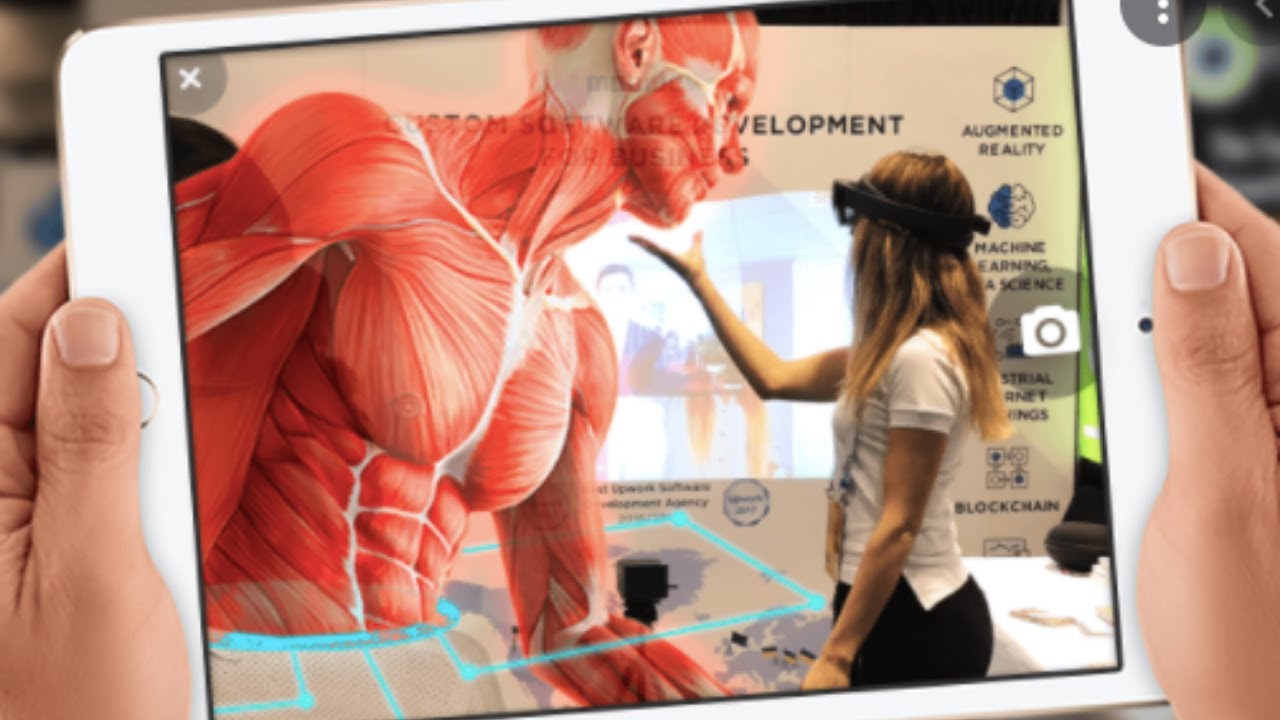
Augmented reality overlays digital information onto the physical world, enhancing rather than replacing real environments as virtual reality does. Smartphones already provide basic AR through camera-based applications, while specialized glasses and headsets promise more immersive hands-free experiences. Unlike VR’s complete immersion requiring dedicated spaces and equipment, AR integrates into daily activities from navigation to shopping to professional tasks. Consumer adoption accelerates as technology improves and compelling use cases emerge beyond novelty games. AR’s potential extends across industries from retail visualization to medical training to manufacturing assembly, fundamentally changing how we interact with information and our surroundings.
Consumer Applications and Entertainment
Retail applications let customers visualize furniture in their homes, try on clothes virtually, or see how paint colors look on walls before purchasing, reducing returns while increasing purchase confidence. Navigation overlays directions onto real-world views rather than requiring constant map consultation, making wayfinding more intuitive in unfamiliar environments. Social media filters adding effects to faces and environments demonstrate AR’s entertainment potential, though concerns arise about unrealistic beauty standards and identity distortion. Gaming achieved mainstream attention through location-based experiences encouraging outdoor exploration while overlaying fantasy elements onto neighborhoods and landmarks. Museum and historical site tours enhance exhibits with interactive content, animations, and multilingual information accessible through smartphone cameras. Shopping apps provide instant product information, price comparisons, and reviews when scanning items in stores, empowering informed consumer decisions. Language translation displays foreign text in your native language when viewing signs, menus, or documents through AR applications. Educational apps bring textbook diagrams to three-dimensional life, making abstract concepts tangible and interactive for visual learners.
Professional and Industrial Applications
Medical training uses AR to overlay anatomical information onto patients or practice mannequins, helping students understand spatial relationships impossible to grasp from textbooks. Surgical planning and guidance display tumor locations, blood vessel paths, and optimal incision points directly in the surgeon’s field of view during procedures. Manufacturing assembly workers receive step-by-step visual instructions overlaid on actual components, reducing errors while accelerating training for complex tasks. Maintenance technicians access equipment manuals, diagnostic information, and remote expert guidance without leaving their hands, improving efficiency and accuracy. Architecture and construction visualization lets clients experience building designs at full scale before construction begins, facilitating better decision-making and reducing costly mid-project changes. Remote collaboration enables experts to see what field workers see, annotating their view with guidance and instructions as if physically present. Quality control inspections overlay specifications and tolerances onto manufactured parts, immediately highlighting deviations requiring attention. Design and prototyping accelerates when engineers manipulate three-dimensional models in physical space rather than on flat screens, improving spatial understanding and iteration speed.
Technology Challenges and Future Development
Battery life remains limited when AR applications continuously process camera feeds and render graphics, restricting practical use duration without frequent recharging. Display technology must balance field of view, brightness, transparency, and form factor, with current options requiring compromises affecting user experience. Spatial mapping and object recognition require substantial processing power to understand environments and track movements accurately in real-time. Privacy concerns intensify as AR devices continuously capture surroundings, potentially recording bystanders without consent and raising surveillance questions. Social acceptance challenges persist around wearing conspicuous headsets in public, though form factors continue improving toward conventional eyewear aesthetics. Content creation tools remain complex, limiting AR experiences to well-funded developers rather than enabling broad creative participation. Standardization efforts aim for cross-platform compatibility, though proprietary ecosystems currently fragment the market and limit adoption. As hardware improves, displays become lighter and more natural, processing moves to cloud computing reducing device requirements, and compelling applications multiply, AR may achieve the ubiquity smartphones enjoy today, fundamentally changing how humans access and interact with information throughout daily life.