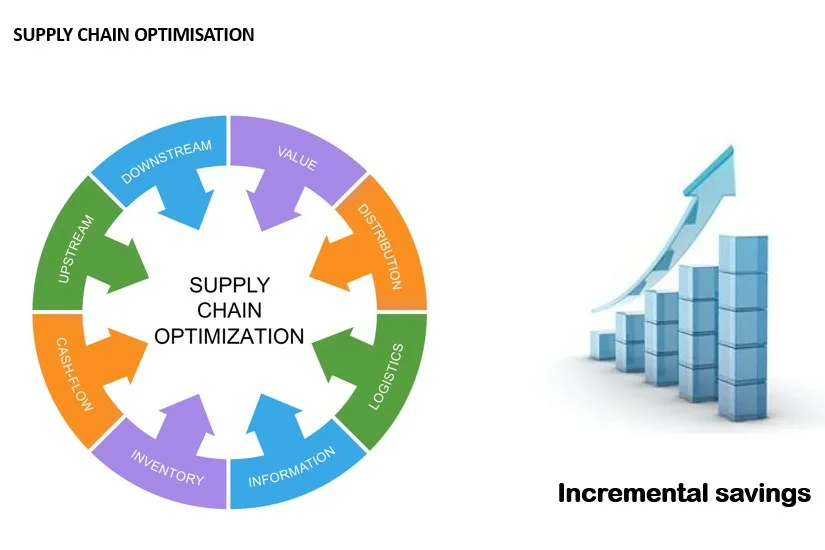
Supply chain management coordinates the flow of materials, information, and finances from raw material suppliers through manufacturing to final customer delivery. Global supply chains enable cost efficiency through specialization and scale economies, yet create vulnerabilities to disruptions from natural disasters, geopolitical tensions, or pandemic-related shutdowns. Recent years exposed fragility in just-in-time systems optimized for efficiency at the expense of resilience. Organizations now balance cost minimization against risk mitigation, building redundancy and flexibility into supply networks. Technology from AI-powered demand forecasting to blockchain-enabled traceability enhances both efficiency and visibility. Understanding supply chain fundamentals helps businesses navigate complexity while consumers appreciate hidden systems enabling modern convenience.
Planning and Demand Forecasting
Demand forecasting combines historical sales data, market trends, seasonal patterns, and promotional activities to predict future requirements with accuracy enabling appropriate inventory and production levels. Statistical models from simple moving averages to sophisticated machine learning algorithms process vast data revealing patterns humans miss. Collaborative planning involves suppliers, manufacturers, distributors, and retailers sharing information improving forecast accuracy across the entire chain. Sales and operations planning aligns commercial forecasts with operational capabilities and financial constraints through regular cross-functional reviews. Scenario planning considers multiple possible futures from best case to worst case, developing contingency plans for different demand levels and disruption types. However, inherent uncertainty limits forecast precision particularly for new products or volatile markets, requiring balance between inventory costs and stockout risks. Agile methodologies emphasize rapid response to actual demand over accurate prediction, reducing forecast dependency through shortened lead times and flexible capacity.
Logistics and Inventory Management
Transportation mode selection balances speed, cost, reliability, and environmental impact across options from air freight to ocean shipping to trucking to rail. Route optimization algorithms minimize fuel consumption, delivery time, and costs while considering constraints like driver hours and vehicle capacity. Warehouse operations employ automation from conveyor systems to robotic picking to autonomous vehicles improving speed and accuracy while reducing labor costs. Inventory positioning determines where to hold stock balancing proximity to customers against inventory carrying costs and risk concentration. Just-in-time systems minimize inventory by closely coordinating production with consumption, reducing waste and capital tied up in stock though increasing disruption vulnerability. Safety stock provides buffer against demand variability and supply interruptions, with appropriate levels depending on lead times, demand volatility, and service level targets. Inventory turns measure how efficiently stock converts to sales, with higher turns indicating better capital utilization though potentially higher stockout risk. Cross-docking transfers goods directly from inbound to outbound transportation minimizing warehouse storage time and handling costs for fast-moving products.
Risk Management and Resilience Building
Supplier diversification avoids dependence on single sources vulnerable to localized disruptions, though adds complexity and may sacrifice volume-based pricing power. Geographic distribution spreads production and inventory across regions reducing impact of localized events from hurricanes to political instability. Nearshoring and reshoring move production closer to final markets increasing costs but improving responsiveness and reducing transportation risks and environmental impact. Strategic stockpiles of critical components or materials provide insurance against supply interruptions, justified for items with long lead times or single-source dependencies. Supplier relationship management extends beyond transactional interactions to partnerships with shared risk and reward aligning long-term interests. Visibility tools track goods in real-time across the entire chain enabling proactive response to delays or quality issues before they cascade into major problems. Stress testing evaluates supply chain performance under various disruption scenarios identifying vulnerabilities and testing response procedures. Continuous improvement methodologies from Lean to Six Sigma systematically eliminate waste and variation improving both efficiency and quality. The optimal supply chain balances competing objectives of cost, speed, quality, flexibility, and resilience with appropriate tradeoffs depending on industry, competitive strategy, and risk tolerance rather than seeking universal best practices.